
Glass, Metal or Fabric Pendant Lights: Which Shade Should You Choose?
In brief
Start with the look you want both in daylight and when the pendant is lit. Compare shade openings, bulb visibility and the surface you will clean before selecting a specific fixture.

Key takeaways
- Clear glass makes the bulb part of the design; diffusing surfaces make the shade more prominent.
- An opaque shade gives a defined outline, but its opening can still reveal the bulb.
- Compare the underside from your usual seated position.
- Check the selected option's light source, controls and maintenance details.
A pendant shade shapes how your fixture looks in daylight and how its light source appears when the room is in use.
Start with the look and light you want
Choose the appearance you want first, then check how the design will work when lit.
- Want the bulb to be part of the look? Start with clear glass and compare bulb appearance and reflections.
- Prefer a glowing shade? Compare diffusing glass and lined fabric, including the view through the opening.
- Want a solid silhouette? Look at opaque shades, then check where their openings let light leave.
For a table or counter, check the opening, source position and available output information as well as the appearance. For the wider choice of fixture, see the pendant lighting buying guide. For island layouts, see our kitchen island guide.
Compare glass, metal and fabric shades
Choose the appearance you like, then compare what the shade reveals and how you will care for it.
| Shade | Look | What to inspect |
|---|---|---|
| Clear glass | Airy, visible bulb | Bulb appearance and reflections |
| Opal or frosted glass | More diffused-looking surface | Opening and source visibility |
| Opaque metal | Defined silhouette | Opening direction and bulb position |
| Fabric | Texture, potentially glowing surface | Lining, diffuser and care |
Clear glass
Clear glass keeps the fixture visually open and makes the bulb part of its design. Compare a lit photo with a daylight view: a visible bulb can draw the eye at night, and fingerprints may be more noticeable. For example, choose a clear globe when you want a decorative bulb to remain visible above a breakfast table; compare lit photos to judge whether that visibility suits your seat. Check access to the inside before choosing. Browse glass pendant lights.
Opal and frosted glass
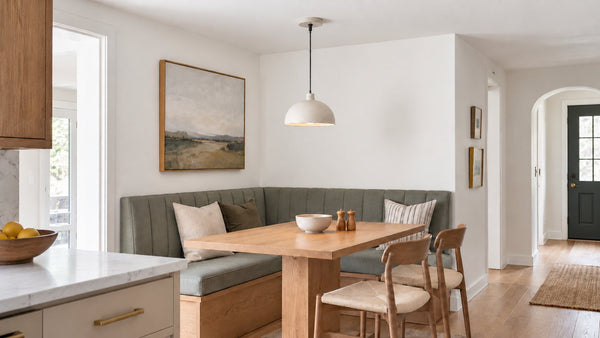
These finishes can make the shade appear to glow while keeping a simple outline. Opal describes a milky appearance; frosted glass has a surface treatment. The effect varies by design, and a white photo alone does not confirm the material. For example, a milky-looking shade may suit a dining area where you want the shade itself to be a visual feature. Look underneath for an opening that may reveal the source.
Opaque metal
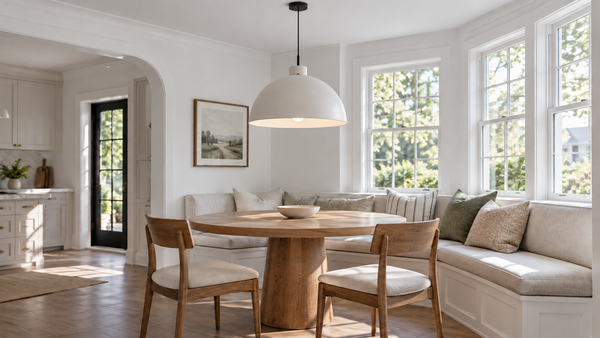
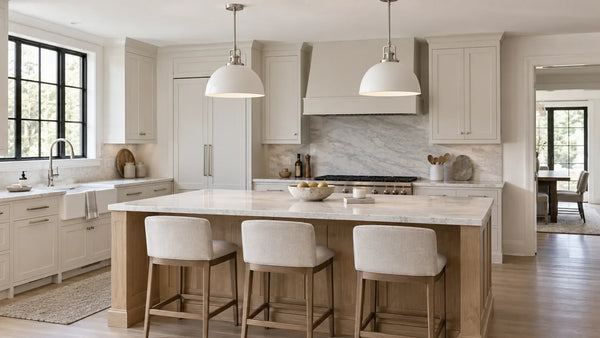
A metal shade adds a solid shape and lets light leave through its openings. A downward opening may suit a table-focused design, but an open top or side changes the effect. For example, a downward-facing dome can offer a defined look above a table; compare the opening, inner finish and how far the bulb sits inside before deciding. Browse metal pendant lights.
Fabric and woven shades
Fabric adds texture when the light is off and may glow when lit. Its lining—the inner layer of the shade—and its bottom opening matter. A diffuser is a panel placed in front of the light source to spread light; a drum with one looks different from an open shade. For example, choose a textured drum for a softer-looking dining area, then check whether its bottom is open or covered. Browse fabric pendant lights.
For a woven look, examine the gaps and any lining to see how much of the bulb is visible. Explore rattan pendant lights.

Check the view from your seat
Look at the pendant from where you usually sit: an opaque shade can still expose its bulb through the bottom.
- Find an underside photo and look for the bulb and any diffuser.
- Consider the sightline from your dining chair or nearby sofa.
- If you want dimming, check compatibility of the selected light source and control.
For example, when comparing two pendants above a dining table, imagine sitting at the chair nearest the opening. If you can see the bulb directly in an underside photo, consider whether that view suits you and compare a design that screens the source. Warm color does not necessarily mean low brightness, and a diffuser does not guarantee comfort from every angle. Ask for a relevant photo if the product page does not show the underside.


Choose a shade that fits your routine
Choose a shade whose everyday care suits its location and your routine.
- Near cooking areas: consider residue and access to the inside and outside of the shade.
- For a clear, polished appearance: check access for removing visible marks on glass.
- For fabric or woven texture: consider dust collection and how you will reach the surface.
Use the instructions for the specific finish to confirm suitable cleaning methods and whether parts can be removed.
Check the details before you order
Before ordering, confirm three details for the exact option you selected:
- Shade and finish: the option matches its photographs and material description.
- Light source and controls: the source is specified and any planned dimming control is compatible.
- Ongoing care: you know how the bulb, shade or integrated LED can be serviced.
Then use the pendant light size guide to check the complete fixture. With a low ceiling, compare the complete installed drop as well as the shade: our low-ceiling lighting guide explains when a pendant or a ceiling-mounted alternative may suit the position. Browse all pendant lights.
FAQs
Can I mix different pendant shade materials in one room?
Yes. A shared finish, shape or color can help different shades feel connected. Compare them together in daylight and when lit, especially when both fixtures are visible from the same seat.
Can shade material alone tell me how bright a pendant will be?
No. Use the available output information for the source or fixture together with its openings and construction. Material names alone are not brightness ratings.
Can I replace just the shade later?
Sometimes. Check the maker's guidance for attachment, dimensions, weight and heat requirements before choosing a replacement.
Am I buying a complete pendant or just a replacement shade?
Check what is included in the listing before ordering. A shade-only listing may not include the suspension, ceiling canopy or light source. Ask the seller to confirm the supplied parts if the photographs and description are unclear.
What should I ask if the listing does not explain the shade construction?
Ask for the material of the shade itself, a photo of the underside, and confirmation of any lining or diffuser for your chosen option. These details help you compare two similar-looking fixtures more reliably.
Sources
Back to How to Choose Pendant Lighting: Size, Shade and Placement
Comments
Have a question or a useful tip? Leave a comment below.